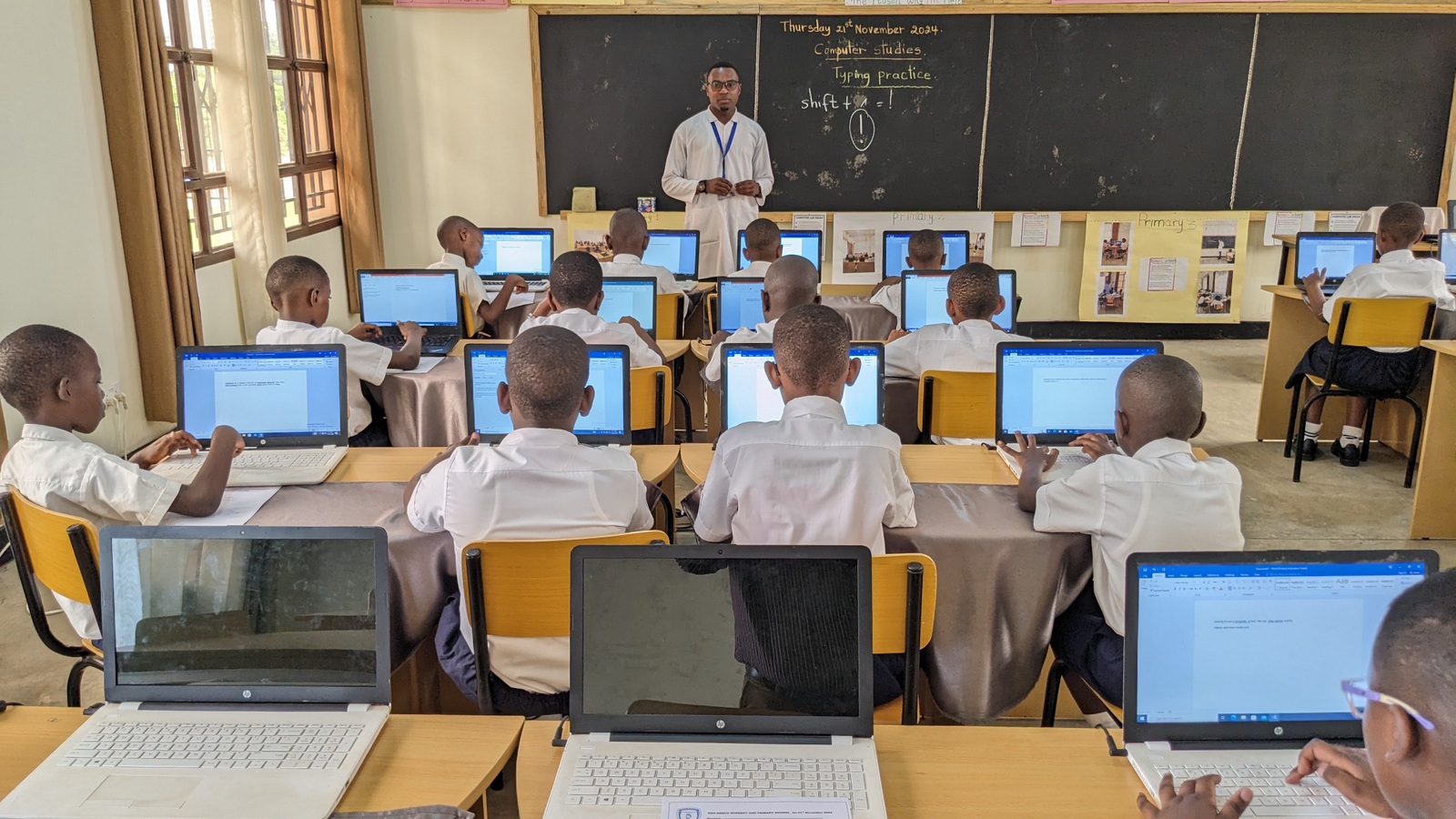
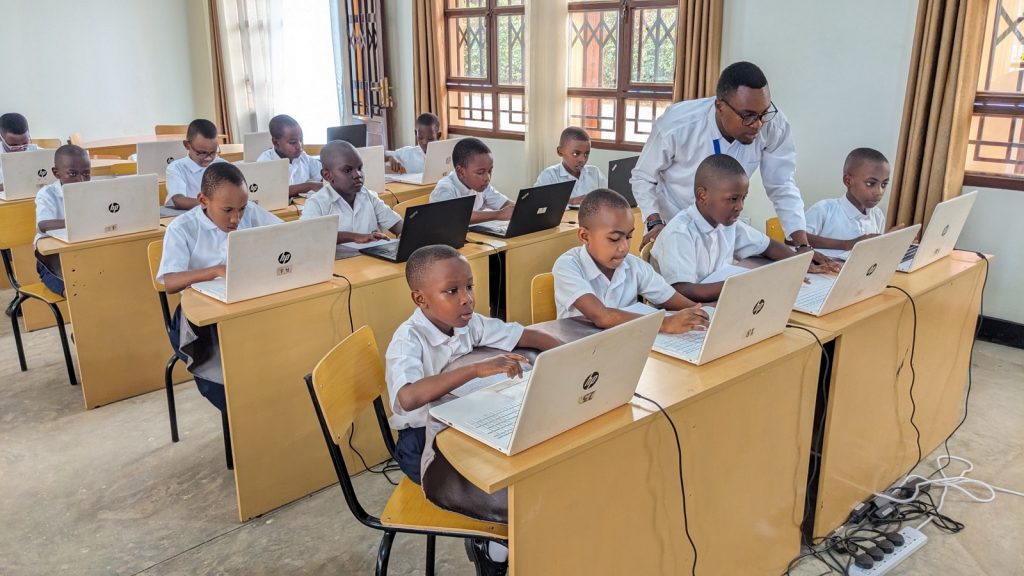
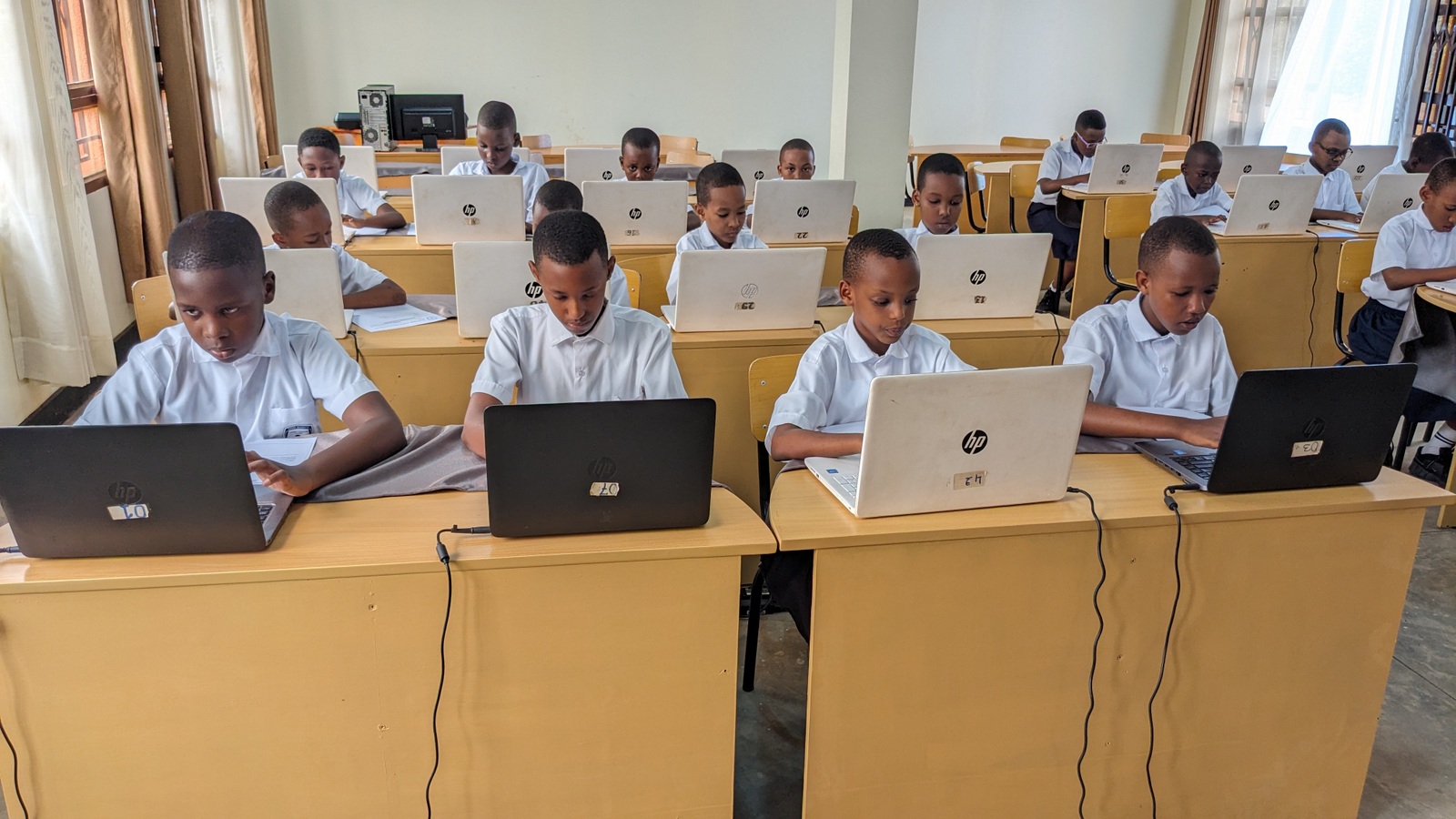
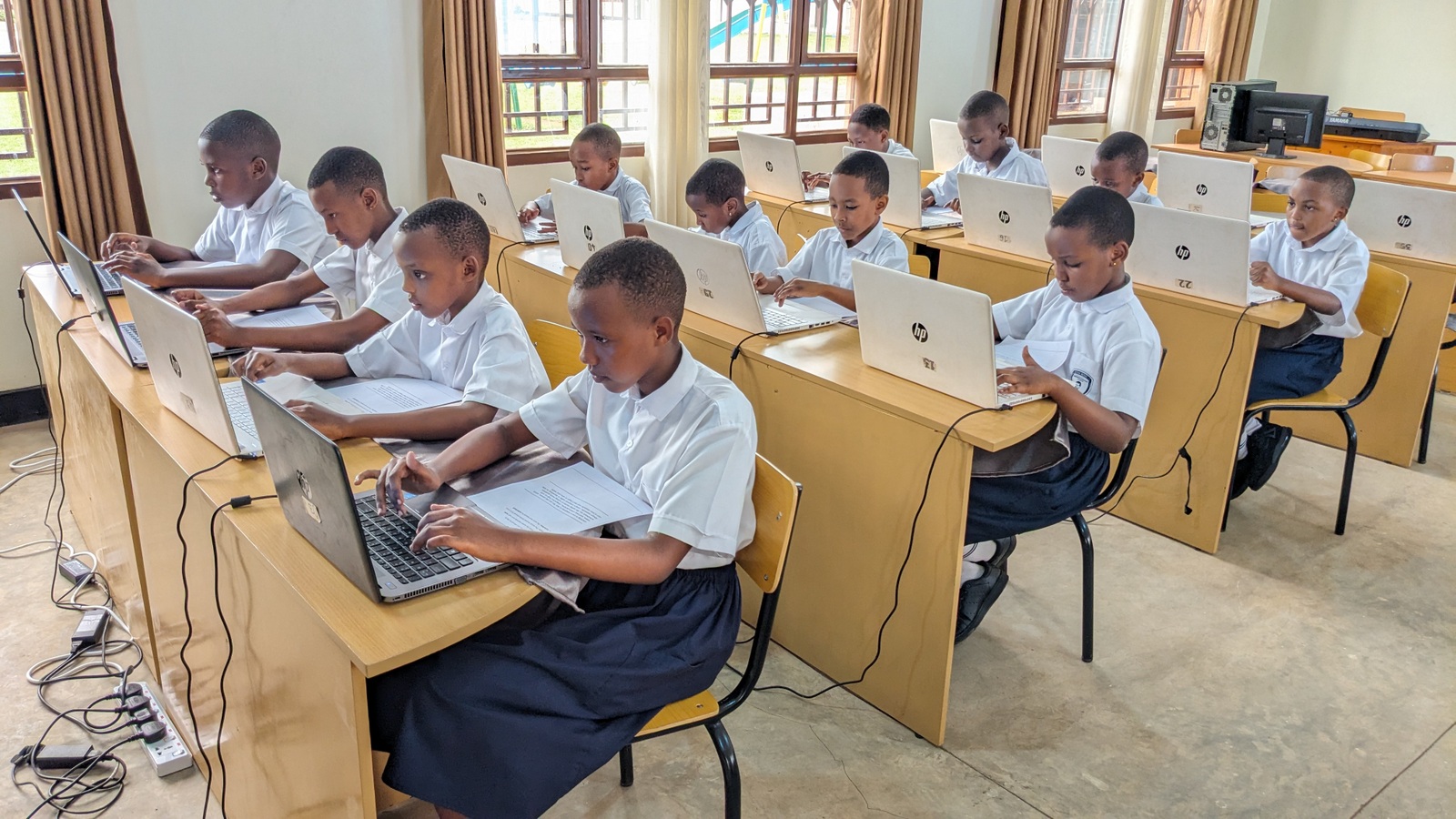
In today’s rapidly evolving digital landscape, imparting technological knowledge to young people is not just an option but a necessity. The scope of what children need to learn is vast. However, this educational endeavor must be balanced with a careful consideration of the potential risks and adverse effects that unregulated technology use can pose. The Don Bosco Nursery and Primary School (DBNPS) have taken significant steps to prepare its pupils for the digital era. The school boasts a well-equipped computer lab designed to help students learn the basic skills of computing from an early age.
Thaddée Bizimana, the computer teacher at DBNPS, shared with this Magazine, a comprehensive guide on how to effectively teach technology to young people while safeguarding their well-being. “We are in a digital era where everyone must have at least basic skills with technology tools and devices like computers. However, we have a shared responsibility for the safety of the technology we use and teach our children,” said Bizimana.
Bizimana expressed gratitude to the administration of DBNPS for their proactive stance on teaching technology to young people. Starting from primary one, DBNPS students receive computer lessons aimed at equipping them with essential technological skills. These lessons are designed not only to build competency but also to educate students on the safe use of technology.
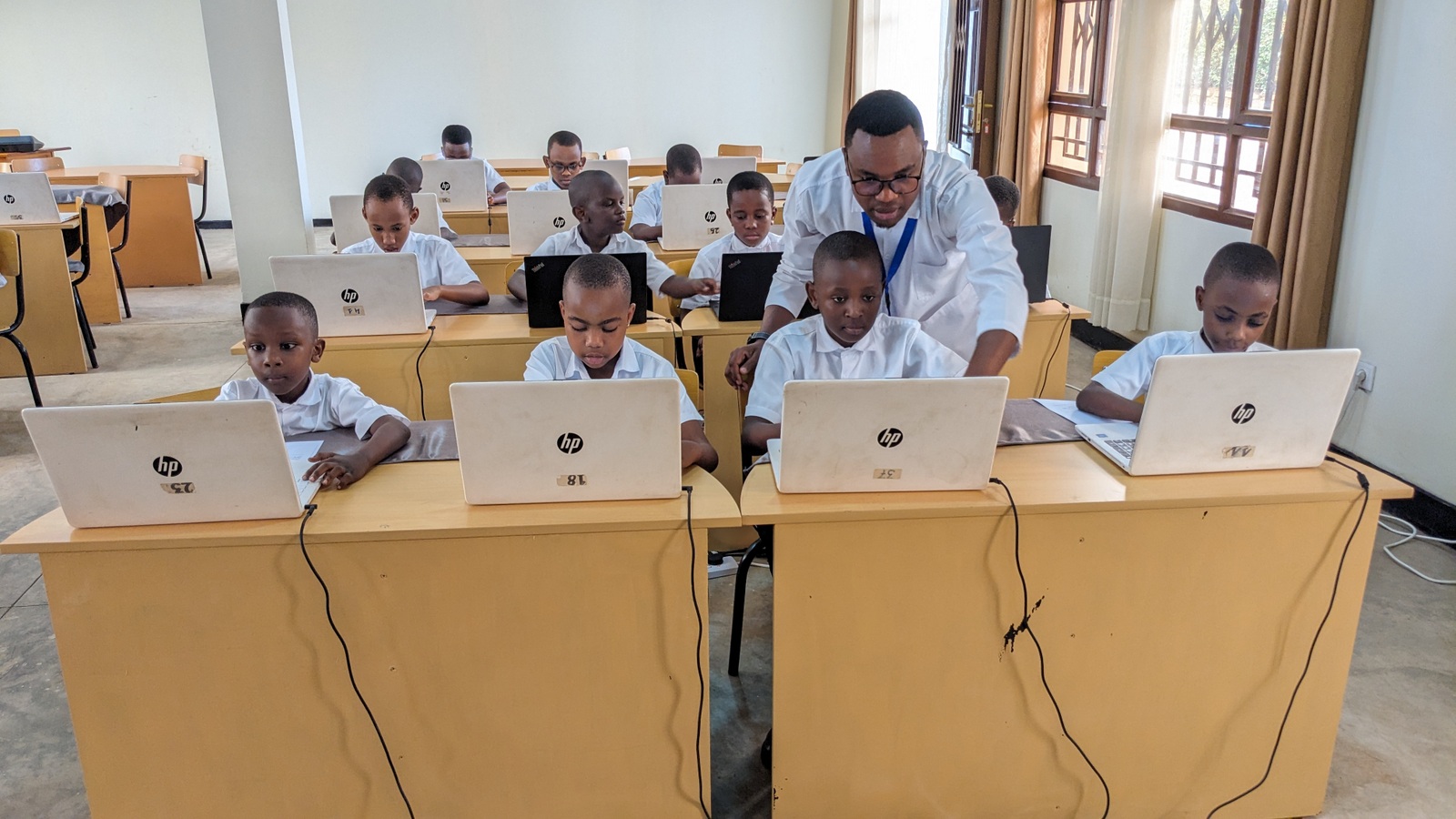
“At this school, we have computers and we teach pupils at the primary level, focusing on giving them basic knowledge of technology. This foundational education will help them adapt to the technological era in the future,” added Bizimana. The teaching at DBNPS goes beyond basic computing skills. It also encompasses lessons on the safe and ethical use of technology. This holistic approach ensures that pupils are not only proficient in using technology but are also aware of the potential risks and how to navigate them safely.
The impact of technologies on young children depends on their age and characteristics. For instance, infants younger than age 2 do not learn well from digital media. At that age, they have a limited understanding of what they see and hear on a screen.
Some apps and e-books can help children older than 2 to learn language and numbers, if their parents guide them. Parents can help by pointing out the important parts of the video, story or problems. Children are more likely to learn from digital media when the content is age appropriate, engaging and educational. Educational apps have a clear learning goal and they encourage the child’s active participation rather than rote learning.